
Welcome to Biological Sciences! There are multiple options for scheduling our introductory lecture and laboratory courses.
Keep in mind:
- Lecture and lab courses in Biological Sciences are separate courses.
- All sample schedules permit completion of a Bio Department major within four years.
- Click for example course syllabi.
Questions about creating an academic plan? Contact your current academic advisor!
- Sample First-year and Sophomore Schedules
Students typically complete their introductory biology lectures and lab by the end of their sophomore year. There are several options shown below and all will allow you to complete a biology major in four years or complete pre-professional health requirements in a timely manner.
Schedule Plan A - version 1: Typical BIOSC & CHEM course arrangement for first year students with bio lab sequence in second year so that only one lab course is taken each term of first year.
First Year Fall
First Year Spring
Sophomore Fall
Sophomore Spring
BIOSC 0150 (lecture)
or
BIOSC 0155 (honors)
BIOSC 0160 (lecture)
or
BIOSC 0165 (honors)
BIOSC 0157 (lab)
Bio 1 & 2 combined lab (*2 credits)
BIOSC 0267 (lab)
Majors only
(*2 credits)
CHEM 0110
(lecture & lab)
CHEM 0120
(lecture & lab)
CHEM 0310
(lecture)
CHEM 0320 (lecture)
CHEM 0345 (lab)
Sample Schedule A - version 2: Typical BIOSC & CHEM course arrangement for first year students requiring two lab courses in one term during first year.
First Year Fall
First Year Spring
Sophomore Fall
Sophomore Spring
BIOSC 0150 (lecture)
or
BIOSC 0155 (honors)
BIOSC 0160 (lecture)
or
BIOSC 0165 (honors)
BIOSC 0157 (lab)
Bio 1 & 2 combined lab (*2 credits)
BIOSC 0267 (lab)
Majors only
(*2 credits)
CHEM 0110
(lecture & lab)
CHEM 0120
(lecture & lab)
CHEM 0310
(lecture)
CHEM 0320 (lecture)
CHEM 0345 (lab)
Schedule Plan B: Sample BIOSC & CHEM course arrangement if you take only one science course in the fall as you adjust to college
First Year Fall
First Year Spring
Sophomore Fall
Sophomore Spring
BIOSC 0150 (lecture)
BIOSC 0160 (lecture)
BIOSC 0157 (lab)
Bio 1 & 2 combined lab
(*2 credits)
BIOSC 0267 (lab)
Majors only
(*2 credits)
CHEM 0110
(lecture & lab)
CHEM 0120
(lecture & lab)
CHEM 0310
(lecture)
CHEM 0320 (lecture)
CHEM 0345 (lab)
**Due to chemistry course sequencing, shift BIOSC rather than CHEM courses**
You can still complete the Bio major in 4 academic years!
Schedule Plan C: Sample BIOSC & CHEM course arrangement if you don’t feel ready for BIOSC 0150
First Year Fall
First Year Spring
Sophomore Fall
Sophomore Spring
BIOSC 0100 (lecture)
BIOSC 0150 (lecture)
BIOSC 0160 (lecture)
BIOSC 0157 (lab)
Bio 1 & 2 combined lab
(*2 credits)
BIOSC 0267 (lab)
Majors only
(*2 credits)
CHEM 0110
(lecture & lab)
CHEM 0120
(lecture & lab)
CHEM 0310
(lecture)
CHEM 0320 (lecture)
CHEM 0345 (lab)
**Due to chemistry course sequencing, shift BIOSC rather than CHEM courses if CHEM 0320/0345 are needed**
Schedule Plan D: Sample BIOSC & CHEM Course Arrangement for students who want to delay taking BIOSC courses until Sophomore year
First Year Fall
First Year Spring
Sophomore Fall
Sophomore Spring
Junior Fall
BIOSC 0150 (lecture)
or
BIOSC 0155 (honors)
BIOSC 0160 (lecture)
or
BIOSC 0165 (honors)
BIOSC 0157 (lab)
Bio 1 & 2 combined lab
(*2 credits)
BIOSC 0267 (lab)
Majors only
(*2 credits)
CHEM 0110
(lecture & lab)
CHEM 0120
(lecture & lab)
CHEM 0310
(lecture)
CHEM 0320 (lecture)
CHEM 0345 (lab)
**Due to chemistry course sequencing, shift BIOSC rather than CHEM courses if CHEM 0320/0345 are needed**
- WOW there are a lot of Biology courses you offer. Where do I start with lectures?
Actually, this is a common question among students. Because everyone has different expectations for what they want to get out of their education in the Biological Sciences, we offer several different flavors of Introductory Biology courses; one of them will be right for you. For the best advise, speak with one of our crack team of Bioscience advisors, but consult the course description below to get a feel as to which course might be right for you.
BIOSC 0805/0815/0835 - Biology for non-majors
Three courses, BIOSC 0805 The Human Body, BIOSC 0815 Genes and Diseases, and BIOSC 0835 Our Changing World, are designed with the non-major in mind. Students will cover a breadth of topics in the Biological Sciences, but not get bogged down with technical issues that are needed for majors. These courses are perfect for students who want their interests in the study of life to be satisfied, but whose primary educational interests lie elsewhere. All three courses can be used to fulfill the School of Arts and Sciences Natural Science Requirements.
BIOSC 0100 - Preparation for Biology
The BIOSC 0100 course is NOT for non-majors. Rather, this course is designed for students who are planning on a major in some field of Biological Sciences, but perhaps never had a high-school course in the topic, or for some other reason feel un-prepared for our standard Introductory Course. Students who place into Math 0010 (Algebra) and want to be Biology majors are encouraged to take this course. If this sounds like you, then this preparatory course can help you maximize your experience in our Introductory courses. Rather than presented all topics equally, this course is designed to strengthen students' backgrounds so that they can succeed. Class size is limited (36 students) to maximize the efficacy of the class.
BIOSC 0150/0160 - Foundations of Biology 1 and 2
The two-course sequence of BIOSC 0150 and BIOSC 0160 is designed for typical students who want to major in the Biological Sciences or who need two semesters of biology for professional health programs or who have an interest in Biology and want the full experience. The companion laboratory courses are BIOSC 005x and BIOSC 006x. Even if you don't plan on pursuing one of our majors, this may be the best course for you if you are scientifically inclined.
BIOSC 0155/0165 - Honors Foundations of Biology 1 and 2
The two-course sequence of BIOSC 0155 and BIOSC 0165 is designed for students who want to major in the Biological Sciences, or have an interest in biology and enjoy inquiry-based learning, and would like a bit more of a challenge.
- Introductory Research Lab Course Choices
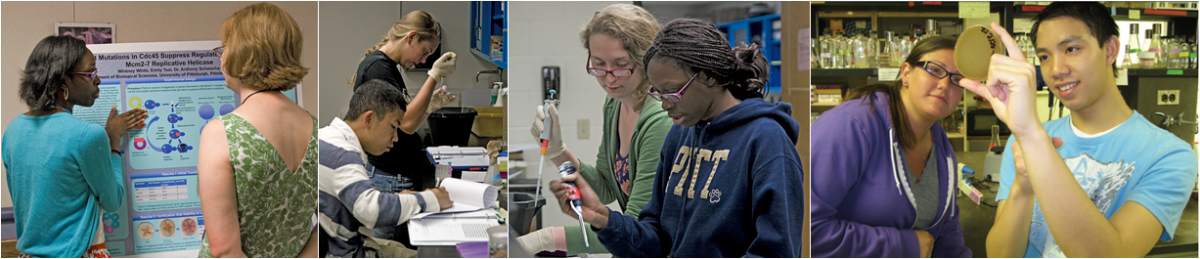
"Hands down, best class I took at Pitt!" - Emily Klonick Fall 2014/Spring 2015
Introductory research lab courses fulfill requirements of traditional biology labs while students engage in the discovery process of tackling real research. The research questions are generated by faculty, but approaches and methods are feasible for students participating in research for the first time. Every term is a little different from the last; coursework adapts as discoveries are made or challenges are faced in preceding semesters. Courses are designed to maximize student experience and learning while doing meaningful research. Hear from former students and learn more about each course below!
Am I ready to start research?
The simple answer is YES! If you are ready to learn and have an open mind, you are ready for research. Instructors design the course at a realistic level for students and teach the basics in the context of research. Homework assignments will always be meaningful to your research. Will there be hard work? Yes. All biology labs at Pitt are challenging. However, in these courses, the work is towards real research. Some of the courses have prerequisites, so be sure to check that you have completed those as needed.
Real research is for you if...
You want to tackle real-world problems that scientists around the globe are trying to solve.
You want to learn techniques that are used in faculty research labs at Pitt.
You want to make novel discoveries.
How will performing undergraduate research in a lab course help me?
While earning biology lab credit, you'll develop skills and knowledge that are useful, not only in your undergraduate studies, but also in your future endeavors beyond Pitt! You will build critical thinking and scientific reasoning skills as you analyze your data with peers and the course instructor. Additionally, your written and oral communication skills will strengthen as you present your findings to small groups of lab mates and at a formal poster session at the end of the course. With guidance, you will choose your own experimental pathway as you learn basic lab skills and continue to grow these talents.
Introductory Research Lab Course Choices
Two Semester Course:
SEA-Phages Virus Hunting Lab
Biosc 0058/Biosc 0068
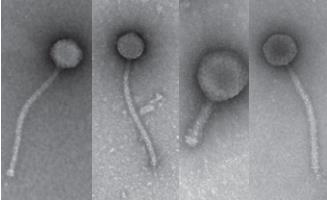
Discover and name your own virus This is a two-semester series for students who plan to take both semesters of introductory biology. In the first semester, you will discover, isolate, characterize and name your own, novel bacteria-infecting virus. You will isolate the DNA from your virus and take pictures of it using an electron microscope. With the rest of your class, you’ll choose some of the viruses for DNA sequencing. In the second semester you learn computer tools to study the information encoded in the DNA and work in teams to generate hypotheses based on the DNA sequence. You’ll also learn to design your own experiments and carry them out to make new discoveries. This course is part of a national research program directed by the laboratory of Dr. Graham Hatfull in the Department of Biological Sciences. Links: SEA-Phage Videos, Graham Hatfull One Semester Courses:
Duckweed Survivor
Biosc 0057

Western PA is home to a vibrant population of aquatic plants, including species of Duckweed. Duckweed is a known bio-remediator; meaning it has the potential to mitigate the effects of increased concentrations of chemical stressors that are common in local Western PA ponds. Partnering with Martin Turcotte’s lab, you will explore the effects of these chemical stressors on the duckweed population. You will identify the toxicology of pollutants on your duckweed species, analyze competition for resources in a Duckweed community experiment, and use DNA sequence analysis to ID your duckweed plants. Your research will ultimately contribute to our understanding of chemical stressors in the area and how essential aquatic species react to the increasing pollutants. Flower Microbiome
Biosc 0057

Helianthus, or more well known as the common sunflower, displays a remarkable UV pattern (right). This UV “bullseye” is a known attractor for pollinators and confers select advantages for the flower. While vastly understudied, it is suggested that the UV pattern of Helianthus may also select for certain types of bacteria that grow on the regions of the petals. Partnering with Tia-Lynn Ashman’s lab, you will collect petals from Helianthus sunflowers and grow the petal microbiome. Your job as a scientist will be to isolate one type of bacteria from the petals and discover the identity of your unknown bacteria using DNA sequencing. In addition, you will characterize the bacterial morphology, identify the region of the flower it came from, and determine its sensitivity or resistance to UV light. Ultimately, your research will contribute to our understanding of the flower microbiome, and how UV patterning of flowers may select for certain types of bacterial growth on petals. Water Channels in Disease
Biosc 0067
Topic: Water Channels
Take a look at real gene mutations that cause Diabetes Insipidus The movement of water in and out of cells is a fundamental cellular process whose disruption can cause disease. In this course you will study mutations in the DNA encoding a kidney membrane water channel called aquaporin 2. People with these mutations have the disease diabetes insipidus, but the reason the mutant aquaporin proteins fail to function is unknown and will be the focus of your research in this course. You will test the production and stability of the protein using our yeast model system. You will also use this model system to develop tests for whether the protein forms a functional water channel and run these experiments to test your own hypotheses of how the mutation may cause disease. This research is connected to work from Dr. Buck and Dr. Kaufmann. Links: Nancy Kaufmann DNA Regulation and Disease Biosc 0067
Topic: DNA Regulation
Investigate a protein involved in DNA storage that's defective in several human cancers DNA is tightly and carefully packaged in cell nuclei, but must also be accessible for highly controlled processes such as transcription, replication, and repair. In this course, you will research how DNA packaging and access are controlled and investigate how mis-regulation of a protein involved in these processes can lead to cancer. You will learn to plan, execute, and interpret experiments using common molecular biological techniques as you generate novel mutant proteins that affect DNA organization using yeast as a model organism. You will also read current scientific literature to understand how the proteins involved in DNA packaging result in human disease and consider how your findings could apply to human disease studies. Links: Karen Arndt Neurobiology: Cell Morphogenesis
Biosc 0067
Topic: Neural Defects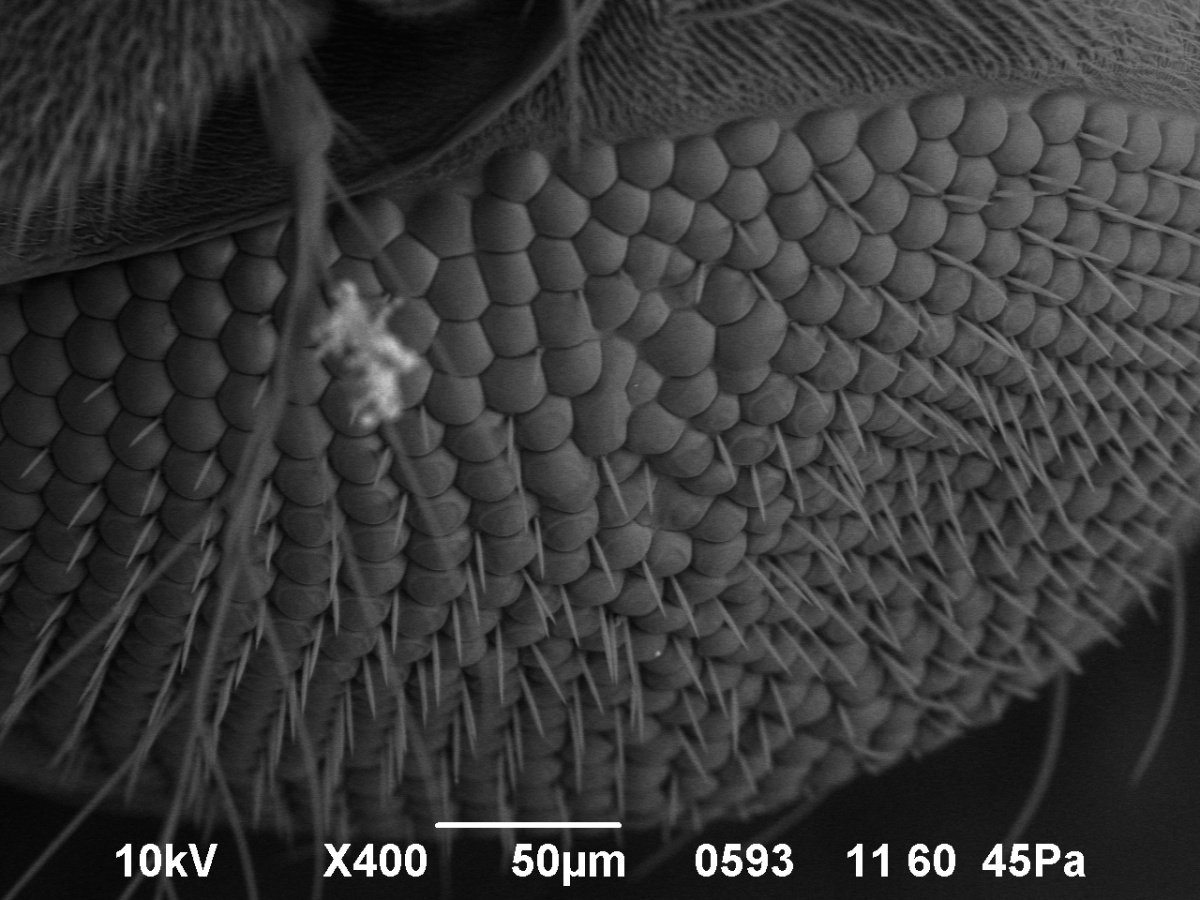
Discover genes that control cell shape During human fetal development, a flat layer of cells bends to form the neural tube. Failure to properly form this tube leads to severe brain and spinal cord defects. In this course, you will research a protein called Shroom which regulates cell shape changes in most animals. Mice without the Shroom3 protein have neural tubes which “mushroom out” during development and fruit flies with extra Shroom protein have defective eyes and wings. You will search for proteins that cooperate with Shroom to change cell shape in fruit flies using genetic approaches and assessing for changes in eyes and wings. You will develop hypotheses about which proteins work with Shroom and how they might control shape change and use microscopy to test your predictions. This work is directly connected to research in Dr. Jeff Hildebrand’s lab. Links: Jeffrey Hildebrand